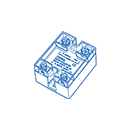

A three-phase heater is often described by its total power, but power alone is not enough to select a solid state relay. The supplier also needs the heater connection, voltage across each switching element, current in each controlled line, control signal and conditions inside the electrical cabinet.
Start with the machine’s electrical drawing. Record whether the heating elements are connected in star or delta, whether a neutral is present and which lines must be switched. Do not assume that every three-phase heater uses the same relay arrangement.
Provide both the supply voltage and the voltage applied to each heater element. These values can differ according to the wiring configuration.
Use the heater nameplate and wiring diagram to determine the current in each controlled line. Then verify the figure against the machine’s operating data. A nominal current calculated from total power may not reflect the installed heater arrangement or every operating condition.
SSR selection must also account for the applicable model’s current rating, temperature conditions and the protection required by the complete circuit. A higher printed current rating does not remove the need to check heat dissipation.
Identify the controller output before choosing the SSR input version. Provide its signal type, voltage range and control method. For temperature control, explain whether the controller uses time-proportional switching or another method. The SSR and controller must be compatible with the intended switching behavior.
If the process requires a specific turn-on method, review the differences in XURUI’s zero-crossing and random turn-on guide.
SSR power loss produces heat during operation. Record the expected cabinet temperature, mounting orientation, available space and airflow. The heat sink and thermal interface should be selected for the actual installation, using the exact SSR model’s specifications. See the SSR heat-sink selection guide for the factors to check.
A standard SSR switches the load but does not necessarily tell the controller whether a heater element has failed or an output is conducting abnormally. If the machine requires fault indication, specify the fault conditions that must be detected and how the alarm should reach the controller. Confirm those functions against the exact model documentation.
XURUI lists three-phase and monitoring options in its solid state relay product range. The suitable model depends on the complete circuit, rather than the heater’s total power alone.
Send the heater wiring diagram, supply voltage, element connection, current per controlled line, controller output details, switching method, cabinet temperature, mounting space and required fault signals. Include the target quantity and destination market if you need a quotation or compliance documents.
Send these details to XURUI for model matching and a quotation.
Not reliably. The wiring arrangement, voltage and current in each controlled line must also be known.
No. The required switching arrangement depends on the circuit design and machine requirements. Use the electrical drawing to establish what must be controlled.
No. Check power loss, ambient temperature and the model’s thermal requirements for the installed arrangement.
Ask when the machine must report conditions such as heater failure or abnormal SSR conduction. Specify the required alarm behavior and verify it against the proposed model.