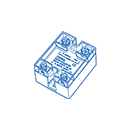

A solid-state relay switches electrical loads using semiconductor devices, avoiding a mechanical contact motion. It is a useful option in industrial heating and automation, but choosing by current rating alone can lead to overheating or premature failure.
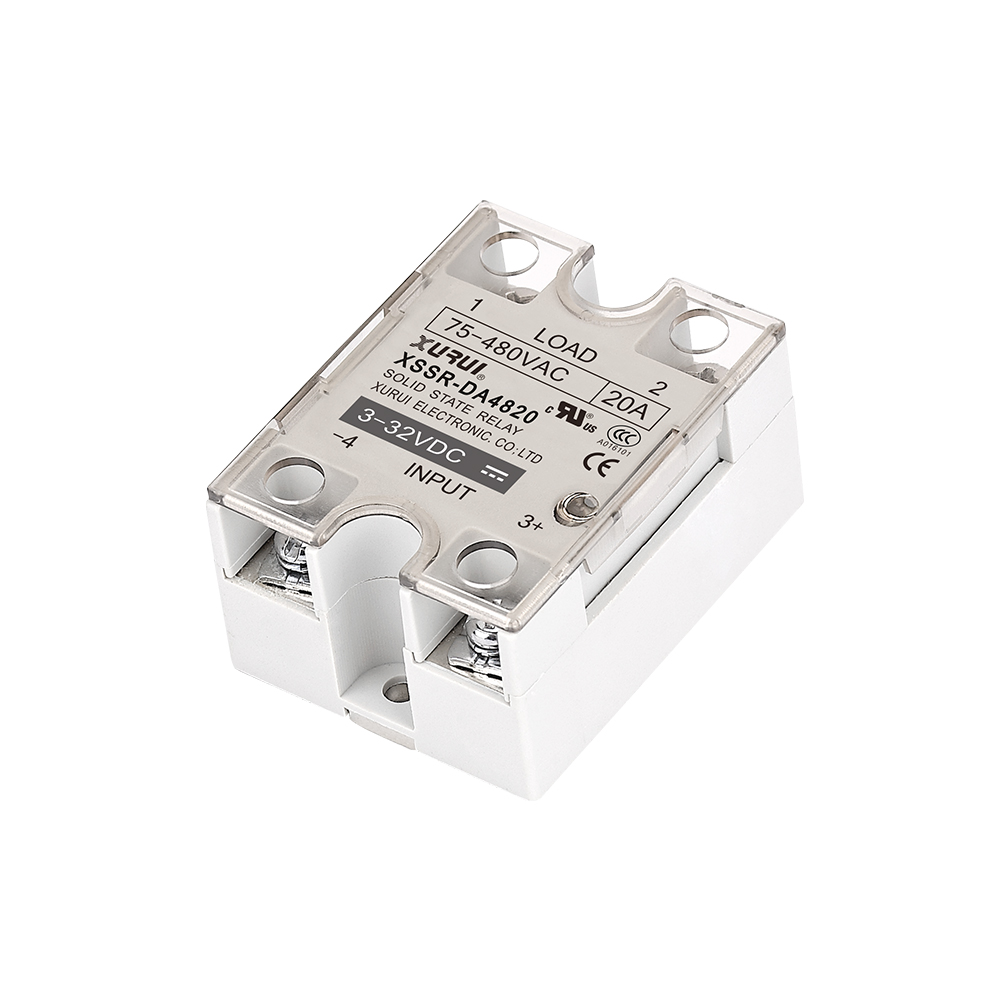
Check whether the controller provides a DC voltage, AC input or analog command. Then specify the load voltage, whether the output is AC or DC and whether the circuit is single- or three-phase.
Semiconductor output devices dissipate heat in the on-state. A suitable heat sink, thermal interface, enclosure airflow and ambient temperature are part of the electrical design, not accessories to ignore.
Resistive heaters, transformers and motors produce different surge currents and power-factor conditions. Zero-cross and random-turn-on behavior suit different control tasks. Check leakage current in the off-state and the required overvoltage protection.
XURUI lists XSSR and XSSVR families with different control inputs, output arrangements and mounting formats. The visible catalog includes single-phase, three-phase and voltage-regulation products; review the exact series before selecting.
Request an electrical diagram, load conditions, heat-sink guidance, protective devices and model-specific compliance documents. Perform temperature-rise and functional testing in the final enclosure.
| Selection point | Required confirmation |
|---|---|
| Electrical requirement | Input / output voltage, current, load type |
| Mechanical function | Actuator, travel, NO/NC and mounting |
| Environment | Temperature, dust, water and IP requirements |
| Documentation | Drawing, test data, model-specific certificates |
Often yes, depending on dissipated power, ambient temperature and duty cycle.
No. Semiconductor SSRs can have leakage that matters for sensitive loads.
Not automatically; surge behavior and load type must be evaluated separately.
Explore related products: XURUI — Explore related products