
An industrial foot switch allows an operator to issue a command without occupying the hands. Its design must reflect the machine function, the required actuation behavior and the potential consequences of accidental operation.
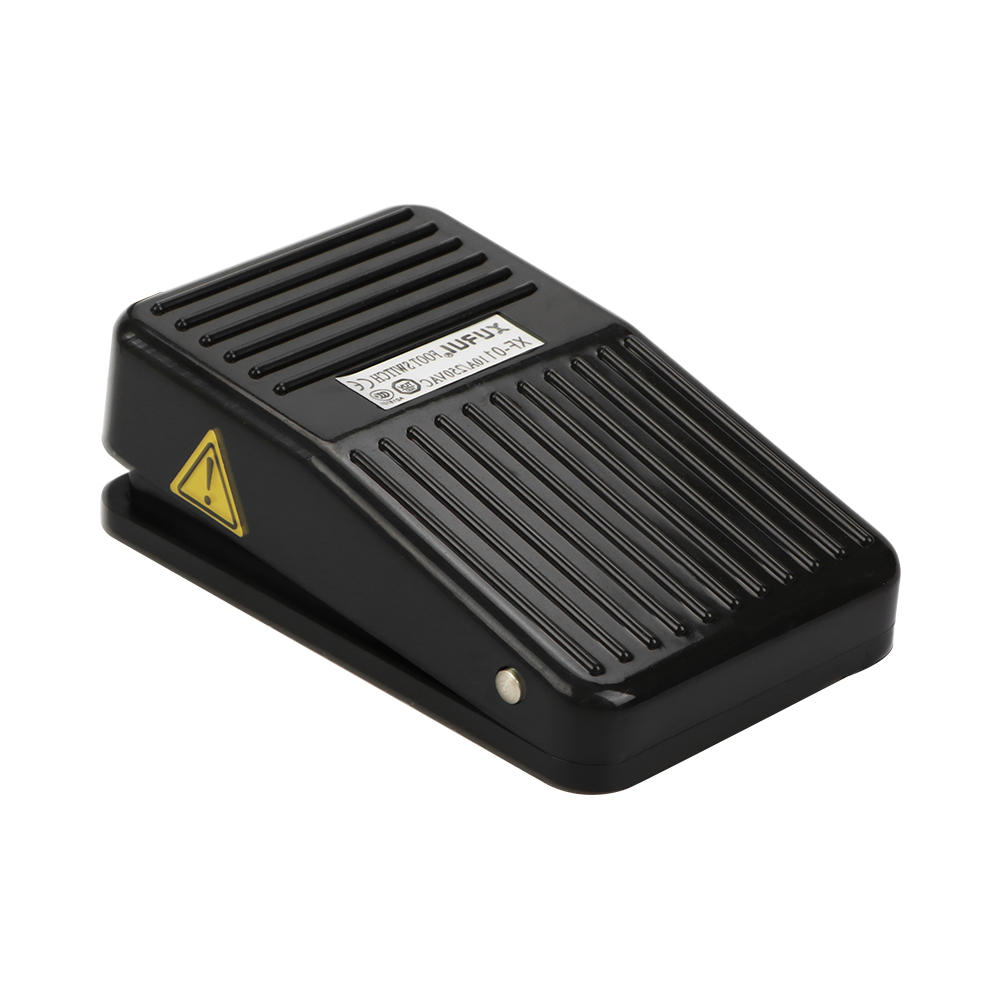
A momentary pedal changes the output only while pressed; a maintained-action device may remain in its changed state. Confirm the machine control logic before choosing a mechanism.
Protective hoods, pedal spacing, anti-slip bases and operator stance can reduce unintended activation and improve repeatability. Dual or triple pedals introduce additional coordination requirements.
Record NO/NC contacts, current and voltage, cable or terminal connection, IP rating, temperature, expected switching cycles and mounting geometry.
XURUI’s XF foot-switch family includes options for single and multiple pedals. The actual model datasheet determines what actuation modes, guards and accessories are available.
Verify response during normal operation, emergency stopping arrangements where applicable and resistance to unintended activation. A foot switch by itself should not be described as an emergency-stop safety device.
| Selection point | Required confirmation |
|---|---|
| Electrical requirement | Input / output voltage, current, load type |
| Mechanical function | Actuator, travel, NO/NC and mounting |
| Environment | Temperature, dust, water and IP requirements |
| Documentation | Drawing, test data, model-specific certificates |
No. Safety functions require a suitable architecture and risk assessment.
No. It reduces risk but must be assessed in the overall machine design.
Machine function, contact logic, protection, pedal configuration, environment and quantity.
Explore related products: XURUI — Explore related products